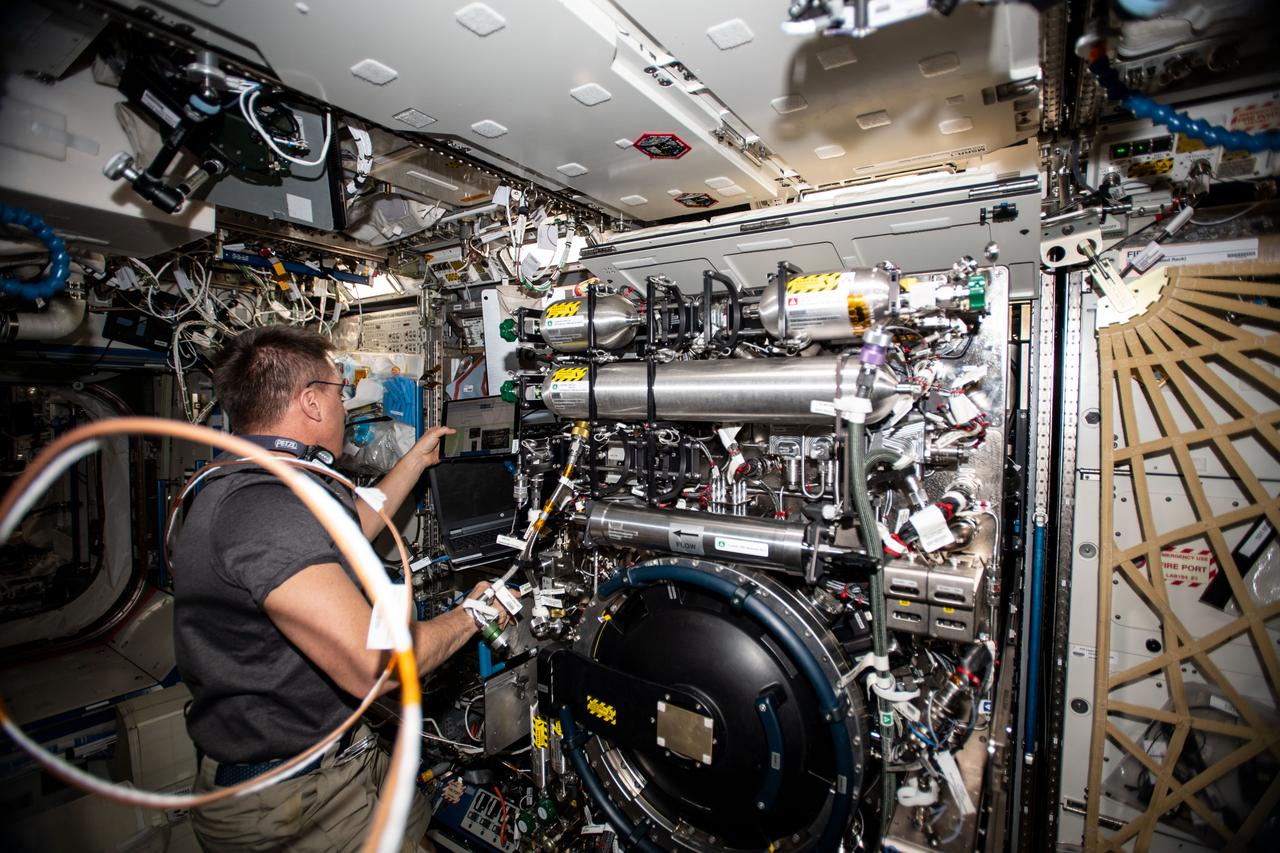
Fires in space do not behave like fires on Earth, and the research that explains them is too large
to search by hand.
01 // Fire dynamics
Unpredictable fire in a spacecraft
A fire is an extreme threat in a confined spacecraft, hundreds of thousands of miles from
Earth. In microgravity, buoyancy-driven convection is absent: hot air does not rise and
cold air does not sink. Flames ignite, spread, take shape, and go out differently than they
do on Earth. They can become spherical, soot-free, blue, and non-flickering.
02 // Lunar habitats
Higher oxygen, higher flammability
Future habitats on the Moon will operate in partial gravity at elevated oxygen. The higher
oxygen is there to reduce decompression sickness, the bends, and to make frequent
spacewalks possible. That same oxygen makes everyday materials far more flammable.
03 // The data bottleneck
A repository that is hard to search
Over decades, NASA ran microgravity combustion experiments in drop towers, on parabolic
flights, on sounding rockets, and on the International Space Station. That record is in the
Physical Sciences Informatics (PSI) repository. The Combustion Science section alone holds
24 investigations and about 12 terabytes, spread across folders, test runs, documents, and
papers. Architects and engineers cannot quickly find the measurements they need to design
fire-safe habitats and vehicles.